I recently arrived home after traveling around to various cities and presenting motivational workshops. I had my mind set on unwinding in my most comfortable chair and putting my work aside for awhile. As I walked up to the door, I waved at the landscaper riding his tractor across my lawn.
Once inside the house, I collapsed into the aforementioned chair, and was instantly met by my wife who told me I needed to talk to the landscaper because he needed some business advice. I can honestly say I felt like saying, “I’m fresh out,” but anyone who knows me would just laugh at such a ludicrous thought.
I walked outside a few minutes (and sighs) later, and waved him down. He sheepishly said to me, “So, you’re the guy who teaches people how to make more money.”
“That’s one way to put it,” I replied. He waited for more so I turned the questioning to him. “How much are you charging me per hour for that tractor?”
“$75,” he replied quickly.
“And how much for your time?”
$15 an hour,” he said.
“So your equipment is worth more than you are. The answer to your challenge here is that you need to increase your value as a service provider or I will find that I have more need for the tractor than for you.”
I then advised him that while he spent 8 hours a day riding a tractor, he could be listening to audio books that would give him numerous tips for increasing his business and his value. “Make your ultimate goal to become more valuable than your tractor,” I said, and walked back to my comfy chair.
I was once sitting on the proverbial tractor. There I realized that my true value should be measured by what I bring to a client in terms of knowledge and skills, not replaceable equipment.
When you start thinking about your professional life — whether you’re in school, training, or into your career — you think about how much money you want to earn. What are you worth and what do you need to do to earn that salary?
For some people, “just enough to get by” is sufficient — enough to pay the bills and enjoy life. Sounds pretty good, doesn’t it? Then you meet someone special and realize you have to raise that level because your needs are greater. You want a decent home and a reliable car, and maybe have some savings tucked away for later. When you think about starting a family, the dollar value of “just enough” becomes quite a bit more.
My question is, why not start out with higher standards? Why not think bigger earlier in your life? Why not use that youthful energy to drive harder, deliver greater results, and earn more than just enough to get by? I think the lower standard is selfish. It deprives you of reaching your potential, making a greater difference, and helping others who can benefit from your success. There are myriad charitable organizations that have suffered greatly from the depressed economy, because donors have been forced to be less generous.
Hard work is the road to wealth. And wealth gives you the opportunity to be generous. It’s about giving. Scripturally, the Bible says I should give away 10% of my wealth. When I lower my own standards, I deprive myself, my family, and my community of the resources they need that I could provide if I were to push myself to deliver greater results and the ensuing income.
I have committed myself to becoming wealthy, not so that I can spend freely, but so I can donate freely, as I wish. I want to be able to share my success with others who deserve a helping hand. That’s the social obligation of wealth. And the reward is far greater than you will ever imagine.
“Wealth” is a word that elicits a wide variety of mental images. Living large, enjoying all the good things in life, and seemingly without a care in the world.
For some people, “wealth” is defined as freedom from the looming burden of debt. The car is owned free and clear and the credit cards aren’t carrying a balance. After years of putting money away, your kid gets a “full ride” college scholarship. Maybe you’ve been making extra mortgage payments to shorten the term and can see the payoff in sight. So, your earnings are your own. You’re not working simply to pay debts.
Others have a vision of wealth that simply translates to a dollar amount in the bank account: millions, tens of millions, or even the billion-dollar mark. For them, there is the hope of winning a lottery, inheriting a fortune, or coming up with the next brilliant invention that the world will line up to buy.
What wealth means to me is the financial substance that enables me to provide for my family and have enough left over to have options. With enough money, you can take the vacations you want, live in the home (or homes) of your dreams, and be free of the daily grind that wears away the joy of your life. You don’t have to be trapped in a job you hate because you can’t afford to give up the paycheck.
I don’t understand the reasoning of people who don’t want to set a goal to be wealthy. We all have an obligation to reach out and help people in need, but you can’t do that if you’re one of them. Remove yourself from the role of beneficiary and assume the role of benefactor for a change.
There is never enough time in a day to accomplish everything you’d like, right? Even if you had a 48-hour day, you’d somehow still reach the waning hours of the evening and shake your head over all the tasks you didn’t get around to finishing (or possibly even starting). The trouble isn’t that there is not enough time in a day, but that you: (a) try to do too much; and/or (b) don’t organize your time well enough to make the most of it.
Here’s a tool that I have found to be successful: Time blocking. I build a schedule around my schedule. If the sales center is open from 10 to 6, I don’t necessarily see that time frame as my work schedule. That’s just the time that I’m committed to being available at this location. But, within that 10-6 window, how am I going to best utilize my time? Rather than let the day take control of me (like sitting and waiting for prospects to wander in), I plan a specific period of time to do my follow-up calls and emails. I schedule a block of time to wholly focus on prospecting. Then I allow myself one hour at the end of each day to wrap up the paperwork. In this way, I can tuck forms into a folder throughout the day, knowing that they will be completed before I leave. And I’m not distracted with the minute tasks associated with paperwork that distract me from the most important work ahead of me: Making sales.
If your office is open during specific hours, you are only on a schedule, but not working on a schedule. By taking the initiative to maximize your time by establishing priorities, you become the master. Without seizing such initiative, you are destined to spend your life taking orders from those people who do.
A positive attitude is an important ingredient in achieving your goals. Believing in your ability to accomplish great things is a powerful tool for success. But such optimism doesn’t mean you can do anything at all. I could step onto a basketball court armed with a positive attitude and I still could not outplay Kobe Bryant. In fact, I can tell you with all certainty that I would be no match for even a bench player in the NCAA. No matter what my mind tells me, I can’t play with their level of skill. But with the right way of thinking, I would play much better than I would with a defeatist perspective.
What positive thinking actually provides is the ability to do anything you want a little bit better. You can run faster, become a better artist or musician, improve your sales skills, or do better at your job, just by believing you can. When you approach a challenge with a successful mindset, you supercharge your confidence and energy. Yes, a positive attitude is an invaluable ingredient but you should not assume that you can get by with that ability alone. A positive attitude without a strategy to achieve what you desire is really just making a wish. Shift your brain into creating an actionable strategy, with a step-by-step plan for making things happen. Then sprinkle it with the magic power of positive thinking.
Words have power, either consciously or subconsciously. You can elevate your spirit with uplifting words (e.g., can, will) or bring them crashing down with the wrong ones. The three most disempowering words in the English language, in my opinion, are:
1. Try
2. But
3. Hope
You can, for example, “give something a try” and the mere act of making even the most meager of attempts qualifies as success. By using “try” you minimize your goals and fail to achieve your potential because you’ve given yourself an “out.”
In the words of the Jedi warrior-prophet Yoda, “Do or do not. There is no try.”
Next on the list is “but” which is a psychological eraser. It negates a positive perspective. “I’d love to go to dinner, but I have to work.” “I tried to quit smoking, but I gained weight.” “I want to eat healthier, but it’s so difficult when I travel.”
Quit showing me your big “but.” Instead of making excuses, make an effort. Every time you hear yourself saying “but,” just stop. Think of how you can empower yourself to overcome the obstacle.
Finally, we have “hope.” From a faith-based perspective, hope is wonderful. Hope, as a noun, can be tremendously empowering, but “hope” as a verb is weak.“I hope the market will improve.” “I hope to close more deals next month.” Hope is not a strategy. It’s a permission slip for failure.
When all is said and done, there is more said than done. In order to accomplish a feat, you’ve got to beat feet.
Biologically speaking, humans are organisms — like plants, trees, and animals. Like all living things, we go through stages. We are born, we grow, and we die. For many, there is another stage: stagnation. You stop growing, going through life in one constant mode. Sure, we reach our adult height, but what about our emotional and professional growth? At what point do you accept where you are and stop driving yourself forward? When is “enough” going to be good enough for the rest of your life?
In the dormant stage, you make no conscious effort to improve. It’s purely status quo, ordinary, and usual. But growth is happiness. Think about the exhilaration when you have achieved a goal. That is the euphoric result of growth. In essence, you bloom. Do you want a garden filled with stems but no blossoms and with vegetable plants that bear no fruit? Of course not.
Stillness is stagnation. Look at the Dead Sea. This withering body of water lives up to its name. There are noinlets or outlets. It is a stagnant body of water that is receding, creating a minefield of sink holes as it retreats to a natural extinction.
I suggest that you examine your life and your work. Where are you in the growth cycle? Make a move toward growth. Movement creates motivation. Set one goal today, perhaps to do something you’ve put off for a long time. Get up and do it. Then let the satisfaction of achievement be your addictive motivator to keep going and growing.
I want to tell you a story…a true story … a critical eye-opening story.
At age 54, I decided to have a complete physical. This was not the routine 15-minute physical, but one that was so thorough it wasn’t covered by my medical insurance. In fact, I had to cough up $5,000 after-tax dollars to pay for the procedure. Man, was it intense! They performed stress tests, blood work, x-rays, full-body scans and everything else recommended for a man my age who had, for years, avoided doctors like the plague.
When all the testing was complete, they gave me the diagnosis: lung cancer. To confirm this and to map the functional processes in my body so they could determine the extent and type of treatment, they immediately sent me for one further test – a PET scan. This was on Dec. 19th. As you might imagine, Christmas was different … and difficult … this year. It was also a bit reflective.
Once, in a tape series, Brian Tracy asked, “If you were guaranteed success and could not fail, what would you do?” In the 1980s, Dr. Robert Schuler, founding pastor of the Crystal Cathedral, put it this way: “What great thing would you attempt if you knew you could not fail?”
When I began asking myself that question decades ago, the answers were obvious. My professional goals were to become a motivational speaker, a best-selling author, finically secure, a respected industry leader and one of the best new-home sales consultants in the world. When I was given the lung cancer diagnosis and spent time during Christmas reflecting on my life, I realized that every one of my goals had been achieved.
Then I thought, “If I’m given a limited time – a year, maybe five – to live, what would I want to do?” The answer came in an instant: Spend time with my family.
Well, yesterday I had the PET scan and on the way to the medical facility, I was involved in an accident that wrecked my car. Can you believe that it did not even faze me? I walked away and the other driver walked away. As corny as it sounds, all that ran through my mind was that everyone was alive and well. For that particular moment in time, we both had the gift of life. I said a prayer of thanks and continued through the difficult process of the PET scan.
Today, which is Dec. 27, the doctor called and said the scan refuted all the other tests. I do not have cancer. They will continue to monitor that suspect portion of my lung, but, for now, I still have the gift of life without any hovering dark clouds. With that good news came the realization that I also have the precious gift of more time to spend with my family. That now tops my list of great things to accomplish.
Although I was uneasy while waiting for the results of the PET scan, I was also at peace. I spent last year cementing an estate plan so I had the calm reassurance that my wife and son would be taken care of financially if something were to happen to me. And, because of my spiritual beliefs, I knew beyond any doubt where I would spend eternity.
There are estate plans that secure your family’s financial future and those that secure your spiritual future. My advice is to make sure you have both in place because you just never know what’s around the bend. Life – as you know it – can change in a heartbeat.
A New Year is now beginning and you know I’m going to advise you to tenaciously and relentlessly pursue your goals. I wouldn’t be me if I didn’t do that. However, this year, I’m including a caveat. Take time to reflect on what those goals really are and on what success really means to you. And those scars that you received from being beaten and battered by life in 2007? Convert them into stars that will light the way to a better and brighter future.
A final thought: Regardless of how large your bank account gets, remember that your true treasure is your cache of family and friends. Love them. Value them. And tell them.
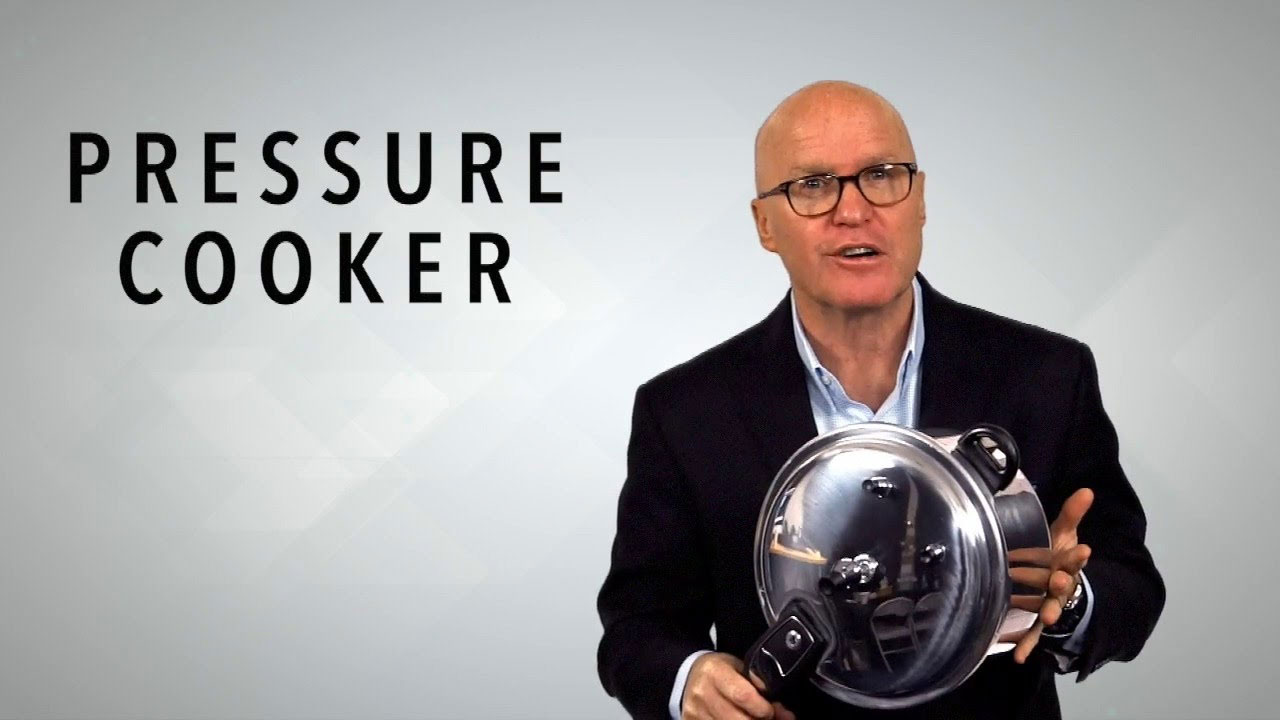
My grandmother used to cook with a pressure cooker. For those of you who might not be familiar with this type of cookware, a pressure cooker is a large sealed pot that does not allow any liquid or air to escape. As the liquid boils inside, pressure builds up and food cooks faster – about 70 percent faster – than it would on a standard stovetop.
Working with a pressure cooker could be very risky if it were not for the pressure release valve on the lid. This allows steam to escape and keeps the pot from exploding.
Do you ever feel like a pressure cooker? Is there so much pressure built up inside of you sometimes that you think your head’s going to explode?
Unfortunately, we are all under pressure at times. There’s the pressure to produce, the pressure of meeting deadlines, financial pressure, family pressures, the pressure of measuring up to the expectations of others (and ourselves) and the pressure to climb that ladder of success. This time of year, with all the extra demands of the holiday, the pressure to perform becomes even greater.
As you achieve more during your lifetime, your responsibilities will grow – and so will the pressure. We all want to reach new levels, but, as author Joyce Meyer warns, “If you want a new level, expect a new devil.” Whenever you climb upward (or out of your comfort zone), you will be subjected to newer and greater challenges as part of the responsibility of being more and having more. And yet you won’t accomplish a great victory without first experiencing a great battle. It’s your ability to fight the battles … to persevere against the pressures of change and mediocrity …. that will set you apart. As the saying goes: If it were easy, everyone would do it.
Well, it isn’t easy and everyone doesn’t do it. Truth is, the majority of us want to avoid pressure and, by default, we also end up shunning success.
So, where’s the balance? How can you be a Superachiever in the pressure cooker of life without blowing your valve?
Evangelist John Hobbs says, “If the pressure on the outside of you is greater than on the inside, you will be crushed.” There’s the secret. You don’t allow external pressures to become greater than your ability to deal with them.
Accept the fact that, in this life, you will have problems and pressures. So, when the times are quiet, fortify your mind by feeding it on words, thoughts and other things that are good, pure and inspiring. Then, when the external pressures hit (and they will), the positive pressure on the inside will be greater than the negative pressure on the outside and you will live in victory.
This season, as we celebrate the birth of the One who came to give us life abundantly, is a good time to begin practicing peace amid the pressure. For it is there that you’ll find the joy, hope and endless possibilities that all wise men and women seek.
Life, I have learned, is not a straight journey from one destination to another. It is more like wandering through the woods. You begin somewhere along the edge with optimistic plans to get to the other side. Between the two points, however, you encounter thorny thickets, thundering streams, sunlit clearings, shaded pathways and (the often indistinguishable) mountains and molehills. It’s easy to get sidetracked … waylaid … frustrated.
When traveling in the woods, you need a compass to point you in the right direction so you won’t end up back where you began.
It’s the same way in life. You need a navigational tool to help you gauge your progress so you won’t feel like you’re getting nowhere.
Your compass in life is your list of goals. Writing down your goals gives you a sense of direction, solidifies your purpose and is a visible reminder when you stray from your intended target.
If anyone knows the significance of keeping his eyes on a goal, it’s an accomplished archer. Prior to positioning his bow, he selects his target so he can calculate the projection of the arrow to get the result he needs. Then he mentally evaluates how the weather, the weight of the arrows, the arrangement of the feathers, the bow’s size and composition and the length of the string, draw and tiller will all work together to produce a smooth launch and accurate hit.
This preparation is complete before he ever takes aim at his target. Why? Because he knows that, if he misses the mark, the fault lies within … not without. Failure to hit the bulls-eye is never the fault of the target.
To improve your aim in life, begin by improving yourself. To improve yourself, set your goals. And by the end of the year, you will have a sense of accomplishment … of being on the right track and on target.
Don’t go through the year list-less. Apply this simple formula to establish your goals for your business and personal life.
I. Write Your Goals. If any goal is not in writing, it is merely a wish. The primary reason people don’t write their goals is because they lack commitment. Putting one’s name on the dotted line signifies a commitment and builds a psychological obligation.
When you write each goal and the plans for its achievement, you usher in clarity and reality. Your goals should be in precise detail. For example, if you want a new home, describe in detail how it will look. What is its location? How many bedrooms and baths? Does it have an office or gym? How is it decorated and what is the square footage? When you can visualize your goal, it becomes compelling.
II. Decide And Desire. Complacency and fear are the root causes of selling yourself short of what you deserve. However, a concrete decision backed by an intense desire will propel you to take action. Motivation comes from within. You must develop strong reasons to keep your desire burning bright. How can you do this? Make a list of all the benefits you will enjoy as a result of accomplishing your goal. The more benefits you identify, the more intense the desire; and a strong desire will keep you from being discouraged if the going gets rough … as it almost certainly will.
III. Record Goals That Are Significant And Incremental. They should not be out of reach, but should stretch your abilities. If your goal is to lose weight, don’t attempt to lose 20, 30 or 40 pounds overnight. Instead, set believable incremental goals that will motivate and fuel your fires. Start with five pounds and, after that achievement, reset your goals for another five pounds. If your goal is beyond anything you have ever achieved in the past, setting it too high too quickly may cause disillusionment and usher in discouragement. It’s easy to quit unless you are experiencing success in measurable degrees.
IV. Determine Your Starting Point. To get where you are going, you must first determine where you are. If you want to increase your net worth, you must create a financial statement of your current liabilities and assets. Keep in the forefront what gets measured is what gets done, and analyzing your current position gives you a baseline from which to measure your progress.
V. Depart From Your Personal Comfort Zone. Whenever you embrace greatness there is a sacrifice involved. There is a price that must be paid and the price must be paid in advance. What are you willing to either start doing or stop doing?
VI. List Your Obstacles. If there are no obstacles, you probably do not have a worthwhile goal, but merely an everyday activity. Your obstacle may be external, such as your involvement in a bad relationship or a job. External obstacles are easier to correct. It’s just a decision to let go and move on. However, internal obstacles are the most difficult to confront. If your internal obstacle is a lack of skill, for example, you may have to sacrifice evenings to obtain an education. If your obstacle is a destructive habit, then you must be willing to work toward breaking it.
VII. Discover Whose Help You Need. List all of those whose cooperation you may need. No one does it alone. Everyone needs someone. The rule in obtaining cooperation is to be a go-giver, not a go-getter. The most successful people are those who have helped other people obtain the things they want. Zig Ziglar says, “You can have everything in life as long as you help other people get what they want.” Refer to the principle of cause and effect. If you take every opportunity to help others, others will help you.
VIII. Make Your Goals Time Sensitive. What is the exact time, day, week, month and year you will achieve your goals? There are tangible goals and intangible goals. When establishing timelines for tangible goals, you activate a “pressure system” that ensures accomplishment. The most common reason people don’t set deadlines is that they fear they will not accomplish their goals. So, what if you set a deadline and don’t achieve it by that date? Fine. You still will have made progress. So simply establish another timeline.
IX. Review And Rehearse Your Goals. Form your goals in clear mental pictures as if they were already achieved. Each time you visit and revisit your goals you increase your belief and faith. Burn and etch your goals deep into your subconscious by repeatedly reviewing them. As you think, so are you.
X. Take Action. Take action and realize situations or circumstances will never be perfect. Get started where you are with what you have. The hardest part is always the first step.
XI. Persist. Winning is a habit. Unfortunately, so is quitting. If you tenaciously persist, you will succeed. When you reach the end of your rope, tie a knot and climb upward. You will eventually reach the top. And when you do, I promise you won’t feel listless.
The Yale Study
In 1953 the graduating class of Yale University was interviewed and asked, “Do you have a specific written plan of action (goals) for your life?” Three percent of the class had committed in writing their goals for life. Ninety-seven percent of the class, though well educated, would be going into the world by the seat of their pants and winging it.
Twenty years later, in 1973, the class was again interviewed and the study revealed that the three percent who had established clearly written, detailed plans for their lives had accumulated more wealth than the ninety-seven percent combined. In addition, the three percent with goals were happier, more well-adjusted and much more excited about life in general.